La Morra The Chapel of Barolo
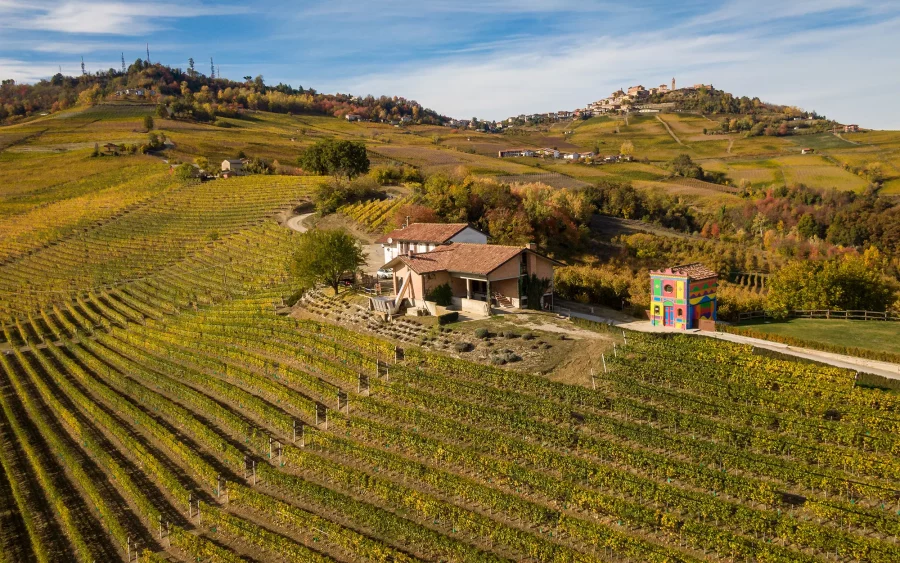
An explosion of colors standing out among the emerald green hills of the King of Wines, a treasure chest of lysergic hues that catches the eye and provokes immediate empathy. The Barolo Chapel, also called the Brunate Chapel, is a true jewel hidden among some of the world’s most famous vineyards. A country church that was transformed from a shelter for farmers during storms into a total work of art in the 1990s thanks to the genius of Sol LeWitt and David Tremlett, its colorful walls, which change in intensity depending on the light, have become an icon of the Italian wine scene, so much so that it is a true landmark of the Langhe, one of the most visited and photographed places in the Piedmont hills.
Interior
David Tremlett in dialogue with the landscape
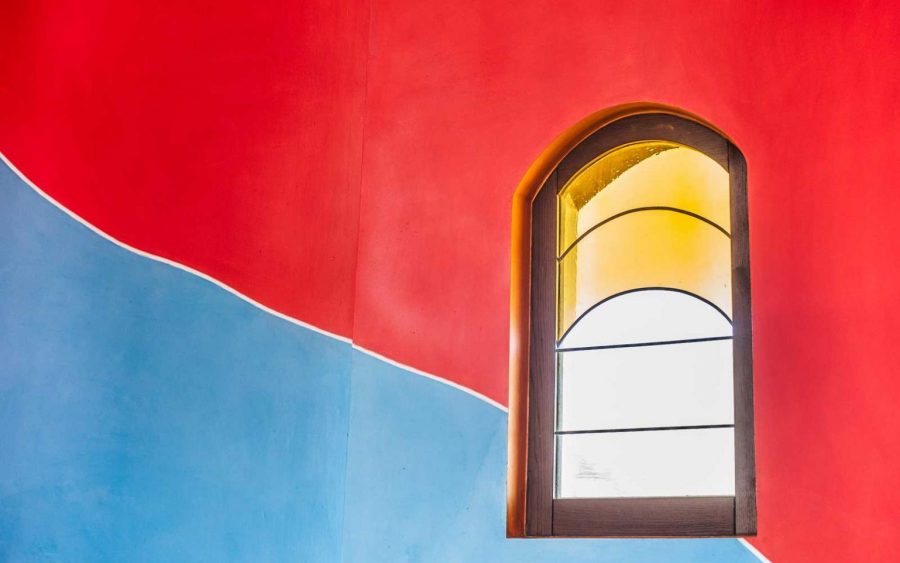
The interiors of the Barolo Chapel were entrusted to David Tremlett. A British artist naturalized Swiss, Tremlett is famous for his mural designs that fresco dozens of famous works and palaces around the world. Through his combination of signs, shapes and colors, Tremlett has given the interiors of the Barolo Chapel an intimate and contemplative atmosphere. The walls, entirely hand-painted by the artist, are wrapped in a warm, enveloping color palette dominated by earthy, ochre tones that recall the colors of earth and wine. The broad, gestural brushstrokes create a textural and vibrant surface, inviting the viewer to touch the walls with their gaze. The skillful use of natural light filtering through the windows enhances the hues of the colors and creates an iridescent atmosphere that varies with the time of day. Tremlett chose to paint the entire interior space, including the ceiling, creating an immersive experience that completely envelops the visitor. The overall effect is that of "a maternal embrace, a place of peace and reflection where time seems to stand still." The interior of the Barolo Chapel fits perfectly into Tremlett's philosophy, whose total artworks blend architecture, senses and landscape.
Exterior
Sol Lewitt between provocation and reflection
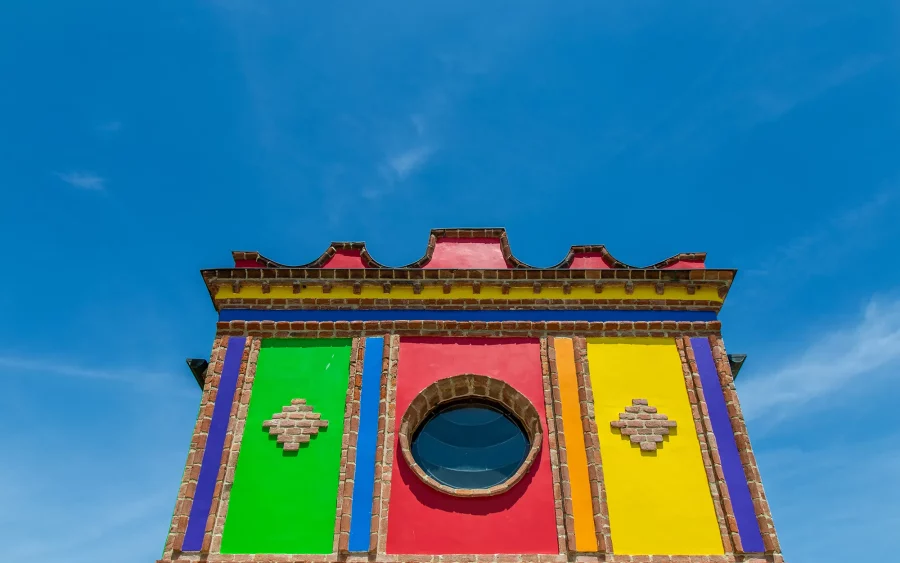
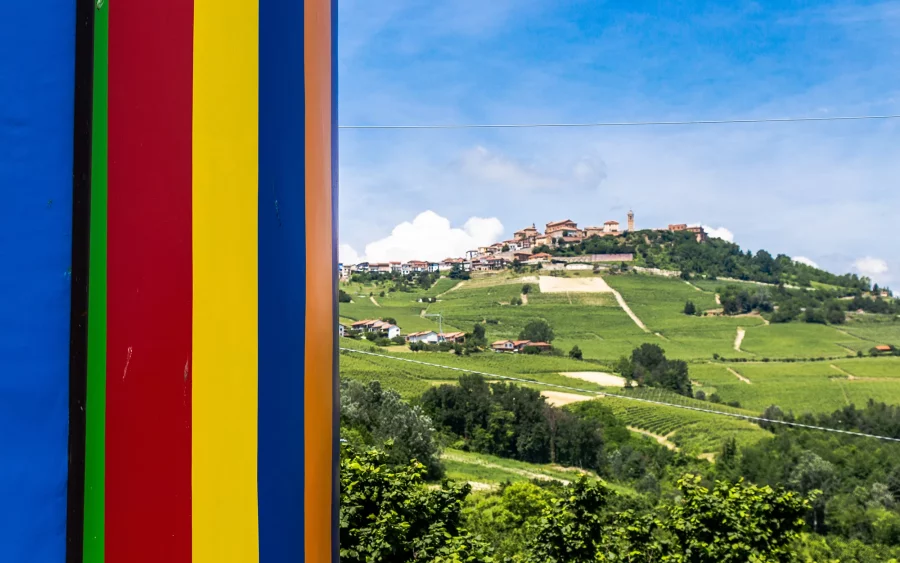
If the interior of the Barolo Chapel is intimate and welcoming, the exterior is lysergic. A slap of bright colors and manly geometries willed by Sol LeWitt, Connecticut-born artist and undisputed master of wall drawing. LeWitt's colors strive hard to clash with the agricultural nature of the surrounding landscape, but without creating a caesura. Rather they act as a counterbalance to the seriousness and rigor of the vineyards, as if, at that point, one were running into a vintner disguised as a Harlequin. LeWitt intervened on the chapel's exterior facades with a series of stark geometric lines and shapes, executed in bright, contrasting colors. Each element is determined by a set of internal rules and instructions, unknown, however, to the observer. The result is a dynamic and joyful, harmonious work that uses a combination of straight lines, curves and simple geometric shapes. The carefully chosen colors create a lively counterpoint to the surrounding landscape and give the building a festive air, with a touch of irony that invariably leads one to reflect on the clashing encounters between nature and culture, past and present, spontaneous and artificial. Sol LeWitt 's intervention on the exterior of the Barolo Chapel is a perfect example of his conceptual approach to art: the transformation of a simple rural building into an immersive work of art, capable of enriching our experience of the world.