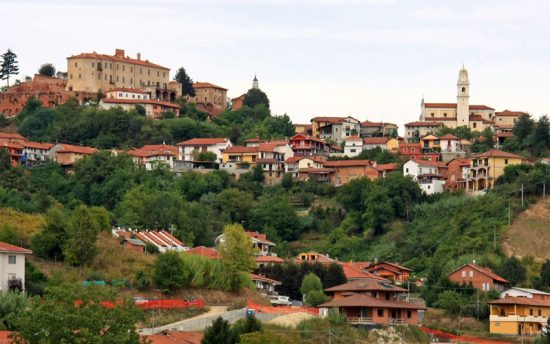
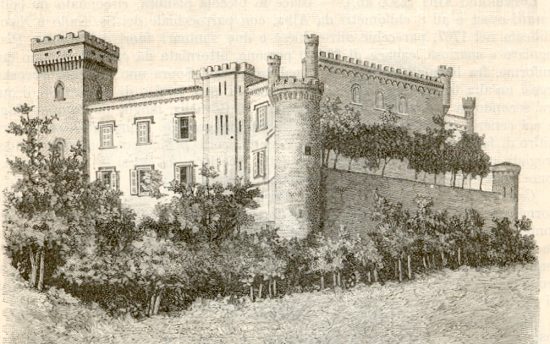
Monticello d’Alba Castle of Monticello
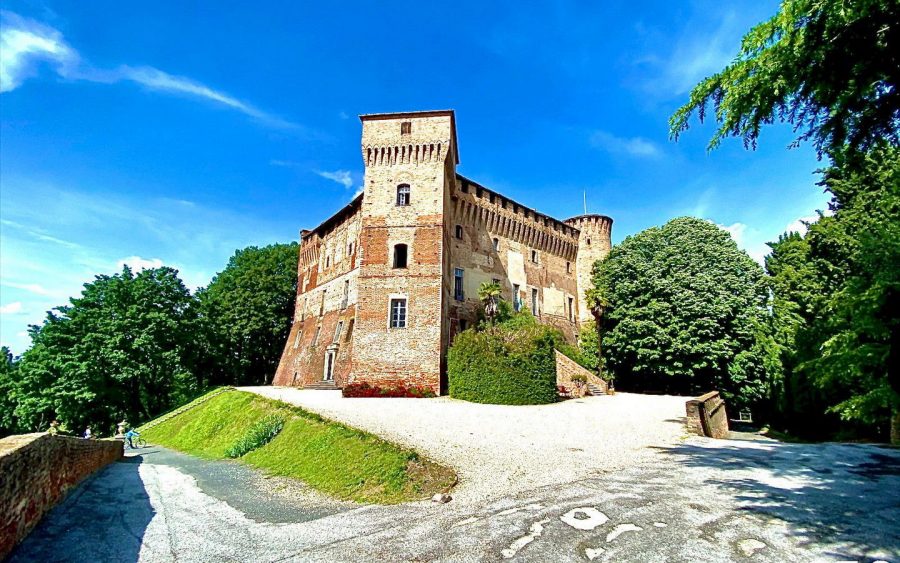
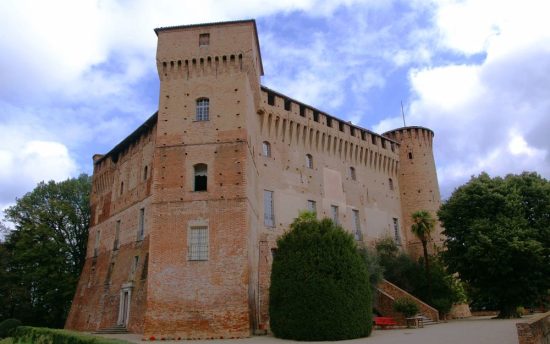
First restored in 1348, Monticello Castle is undoubtedly the most effective Roero example of fortified architecture of the period.
The 14th century, a century of Gothic (courtly and chivalrous, dualistic and angular), is marked bystructural enrichment in the seigniorial estates in the Roero, albeit quite fragmented territorially.
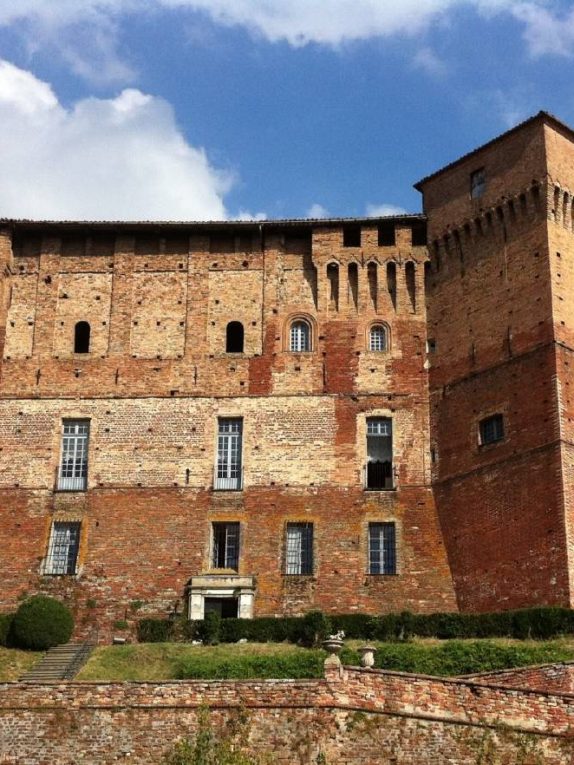
…still preserved in its original elements, such as the two corner towers, one round and other square, the deep machicolations at the front, at the conclusion of the patrol pass, the ramparts that accentuate the prominence of the monumental structure…
ANDREINA GRISERI – 1974.
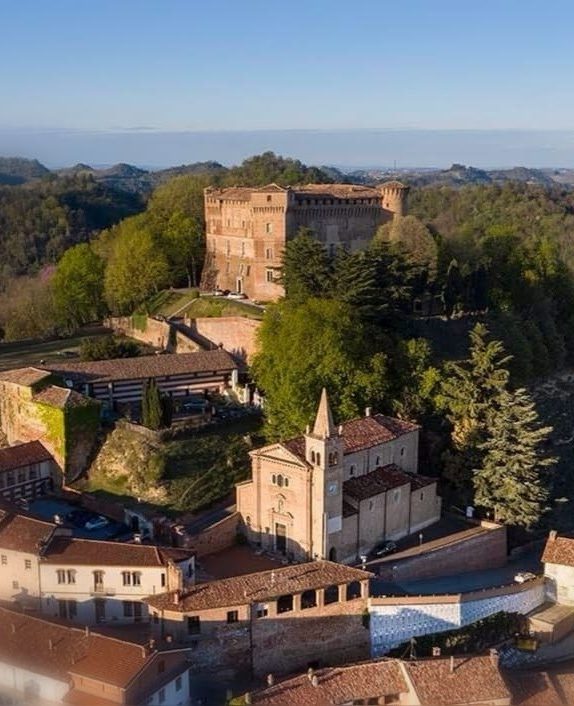
Posto a controllo della valle Tanaro e dei relativi feudi, il castello è appartenuto inizialmente ai vescovi d’Asti, subendo nei secoli successivi diversi cambi di proprietà: nel 1237 passa ai Gorzano d’Asti, nel 1341 ai Malabaila e nel 1376 se ne impadroniscono i Roero che ne inizieranno l’ampliamento e gli conferiranno l’attuale assetto definitivo.
Today the interior partly reflects the appearance of an 18th-century residence, thanks to the intervention of architect Rangone in the years 1785-87.
Interior
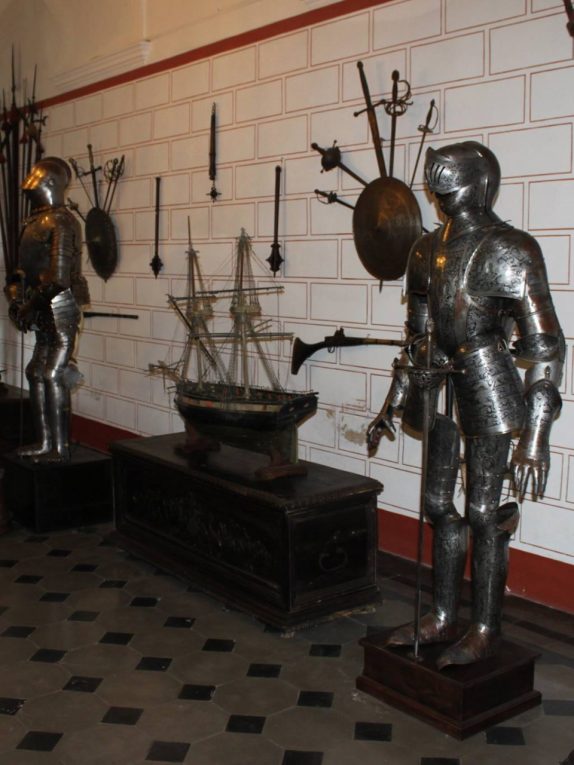
The tour of the castle begins with the Hall of Arms, located on an intermediate level.
The Hall of Arms
Various specimens of armor, spears, swords, clubs, and firearms from different eras are admired in this compartment.
From here you can access the aristocratic chapel of St. Barbara, rebuilt in this location in 1786 at the behest of Count Francesco Gennaro Roero.
In it can be observed, in particular, the 17th-century altarpiece where the titular saint is depicted.
The representation plan
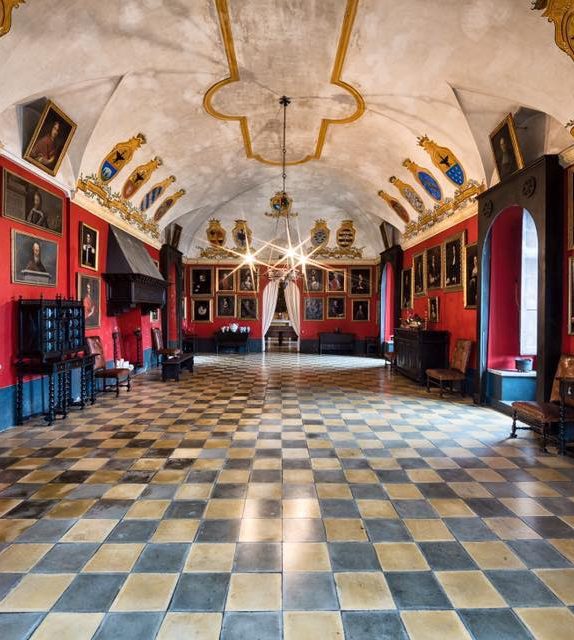
Ascending internally to the castle's reception floor, one enters the hall of honor.
After visiting the next billiard room, one can enter the 18th-century gallery, rich in fine furnishings and elegantly decorated with a cycle of figured and ornamental frescoes inspired by hunting.
Below is the castle library, equipped with many valuable publications and featuring a large fireplace.
The inner courtyard
Stepping out into the inner courtyard, it is possible to admire the sober, severe composure of the walls with Roero emblems.
They are characterized by the openings with respective round or pointed vaulted arches, two levels of loggias on one side, the access hatch to the cistern below, and the leaning corner turret that houses the spiral staircase to access the upper levels.
The towers
On the top floor of the elevated round tower is located the prison.
The other tower, in notable prominence on the opposite side, is the parallelepiped one, rotated 45 degrees from the edge of the south and west elevations.
Instead, two hanging turrets above conclude the northern front.
Exterior
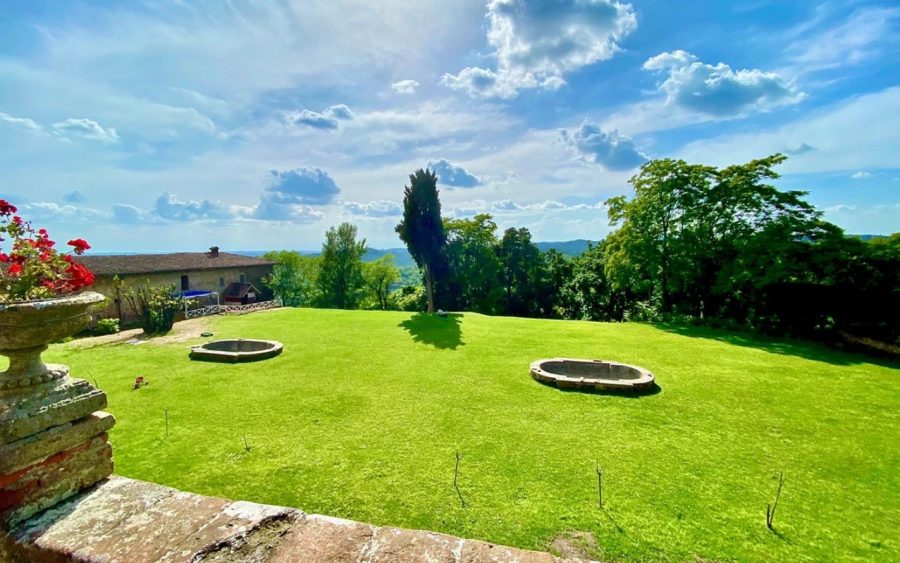
In 1827 the Roero family entrusted the task of remodeling the castle gardens to the renowned German landscape architect Xavier Kurten.
Xavier Kurten worked extensively for the House of Savoy, and is famous for introducing the romantic English garden to Piedmont.
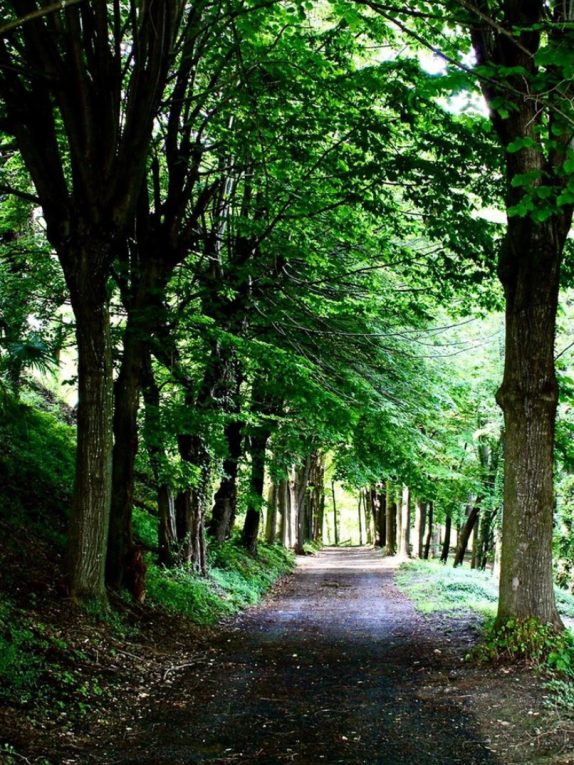
In addition to creating a magnificent English garden, the great architect designed three parallel avenues to the manor house, which can still be traveled today, encircling the hill and staggered by some 20 meters.
The shortest one starts from the gate on Via Castello, the middle one, called "lime tree avenue," connects the entrance on Via Castello with the one on Piazza San Ponzio, and the third one is called "of the pinnacle" because of the presence of a small circular wooden hut, covered with straw from the Tanaro River, which has disappeared today.
The family is planning to replace it with a Victorian greenhouse that will be used as a tea room.
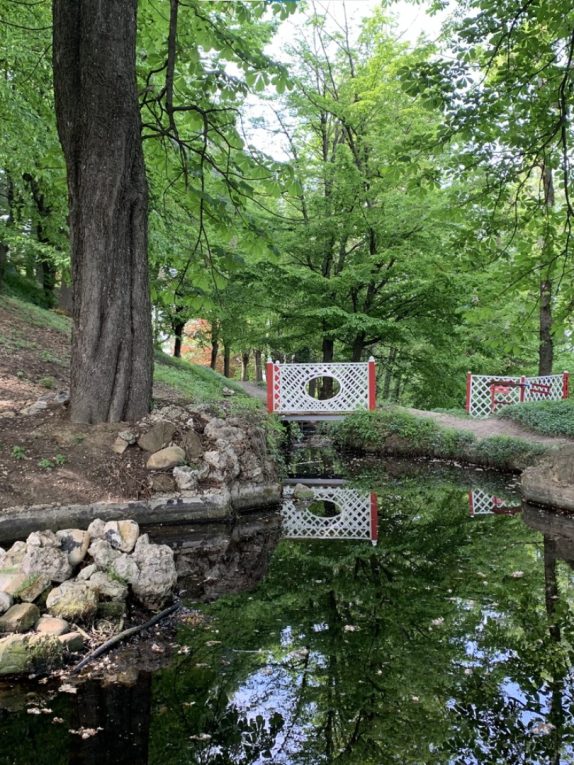
Xavier Kurten had also designed a rainwater harvesting pond, which was only realized in 2013; 300 square meters wide, it is fed by water from the castle's gutters.
Prices and information
Some useful information for visitors
The visit inside the Castle is preceded by a guide, while the visit to the Park is conducted independently.
Visitors can frame QR codes installed at various points of interest to listen and watch movies directly with the host's explanation.
Guided tours for groups with more than 15 people are possible year-round by reservation.
It is also possible to book educational workshops for school groups or groups.
Castle + Park
- Full price : 7,50 €
- Reduced price: 4,00 € for children 6 -14 years old
- Family Special: 20,00 € 2 adults + 2 children (6-14 years old)
- Piemonte Valle d'Aosta Museums Subscription holders: 5,00 €
- Groups : 7,00 € minimum 15 people all year round by reservation
- Free of charge: children up to 5 years old, disabled, accompanying groups, journalists and professional guides
Park
- Full price: 2,50 €